
Advanced Precision Treatment for Renal Cell Carcinoma
CAIX (CA9) Targeted Therapy for Metastatic Kidney Cancer
About CAIX (CA9) Targeted Therapy
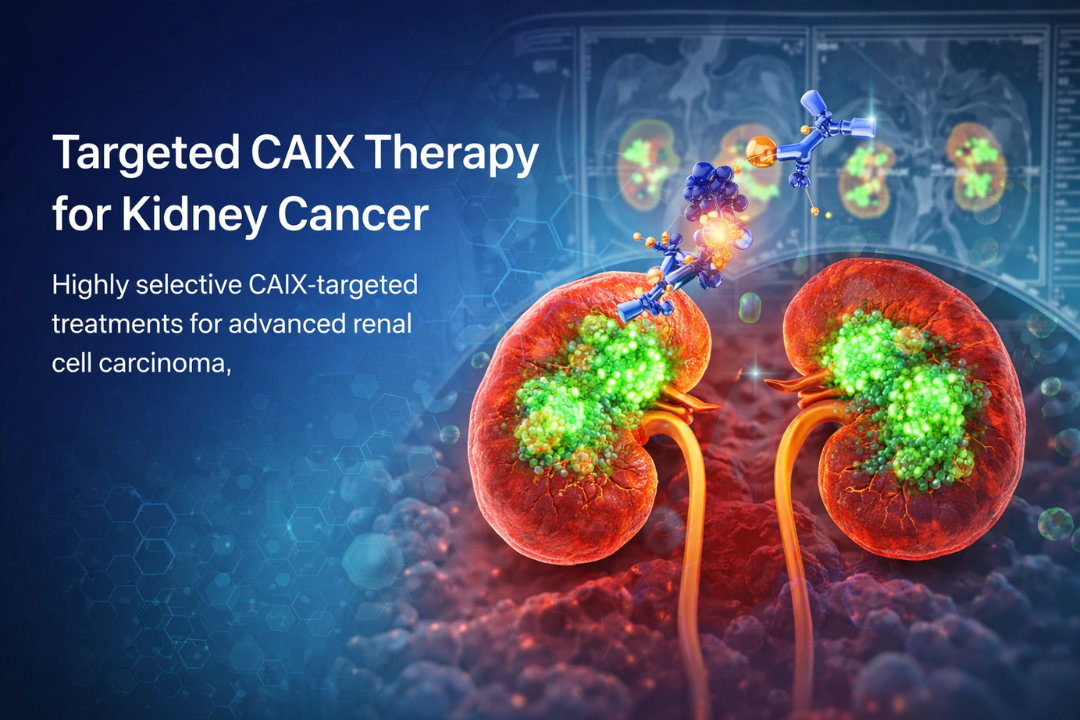
CAIX (Carbonic Anhydrase IX/CA9) is highly expressed in clear-cell renal cell carcinoma and minimally present in normal tissues, making it an ideal target for imaging and therapy. In CAIX-targeted theranostics, a radioactive molecule binds to CAIX on tumor cells after injection, delivering targeted radiation. This enables precise treatment while minimizing damage to healthy tissue, offering a promising option for advanced kidney cancer.
Who Can Benefit from CAIX Targeted Therapy?
CAIX-based therapy may be suitable for patients with:
01. Metastatic Renal Cell Carcinoma
Patients whose kidney cancer has spread to other parts of the body such as:
1. Lungs
2. Bones
3. Liver
4. Lymph nodes
5. Brain
Cancer That Has Progressed After Standard Treatments
02. Cancer That Has Progressed After Standard Treatments
Patients whose cancer continues to grow despite treatments such as:
1. Targeted therapies (TKIs like sunitinib, pazopanib, cabozantinib)
2. Immunotherapy (nivolumab, pembrolizumab)
3. Combination immunotherapy regimens
03. Tumors Showing CAIX Expression
Before treatment, patients may undergo a CAIX PET/CT scan. This scan helps determine whether the tumor expresses the CAIX protein. If the tumor shows uptake on the scan, it indicates that CAIX-targeted therapy may be effective.
04. Progressive Disease
Patients whose cancer is progressing despite ongoing treatment may benefit from CAIX-directed therapy.
How Does CAIX Targeted Therapy Work?
Patients first undergo a CAIX PET/CT scan to determine whether the cancer
cells express the CAIX protein.
A radioactive molecule linked to a CAIX-targeting compound is injected into
the bloodstream.
The molecule attaches to CAIX proteins present on kidney cancer cells and
delivers radiation directly to the tumor, helping to destroy cancer cells or slow
tumor growth.progression.
What Does the Treatment Involve?
Simple Intravenous Injection
The therapy is administered through an IV injection, usually completed within 2–3 hours.
Post-Treatment Observation
Patients may stay for a short observation period after the injection. In some cases, post-therapy imaging is performed to see treatment distribution.
How Should I Prepare for the Therapy?
Before starting CAIX-targeted therapy, patients undergo several evaluations, including:
-
Routine blood tests to check kidney function, liver function, and blood counts
-
Imaging studies to evaluate the extent of cancer
-
A CAIX PET/CT scan to confirm that the tumor expresses the CAIX target
These steps help ensure that the therapy is safe and effective for each patient.
Benefits of CAIX Targeted Therapy
-
Precision Treatment
The therapy targets cancer cells that express CAIX, allowing radiation to be delivered directly to tumors.
-
Effective in Advanced Disease
It may help control cancer even in patients whose disease has progressed after multiple treatments.
-
Whole-Body Treatment
Since the therapy travels through the bloodstream, it can target cancer cells throughout the body, including metastatic lesions.
-
Potential Combination with Other Treatments
CAIX-targeted therapy may complement other treatments such as immunotherapy or targeted therapy, potentially improving overall disease control.
-
Better Tolerability
Compared with traditional chemotherapy, targeted radioligand therapy often causes fewer systemic side effects because radiation is directed mainly to tumor sites.
Possible Side Effects
Most patients tolerate CAIX-targeted therapy well. Some mild side effects may occur, including:
1. Mild fatigue
2. Mild nausea
3. Temporary reduction in blood counts
These effects are usually temporary and manageable, and patients are closely monitored throughout treatment.
What Happens After Treatment?
Follow-up Monitoring Patients will have regular follow-up visits including:
1. Blood tests
2. Clinical evaluation
3. Follow-up imaging scans
These assessments help doctors determine how well the treatment is working.
Evaluation of Treatment Response
Follow-up scans may show whether tumors are:
1. Shrinking
2. Stable
3. Progressing
Based on these results, doctors will plan the next step in treatment.
Subsribe To Our Newsletter
Stay in touch with us to get latest news and special offers.