
Radioactive Iodine Therapy (RAI)?
About Iodine Therapy
Radioactive Iodine Therapy (RAI) is a treatment that uses a special kind of iodine, called radioactive iodine (I-131), to treat thyroid problems. This iodine is absorbed by the thyroid, where it releases radiation to target and destroy either overactive thyroid cells or cancerous thyroid cells. Radio Iodine therapy is administered orally. No Major side effects are noted because of RAI.
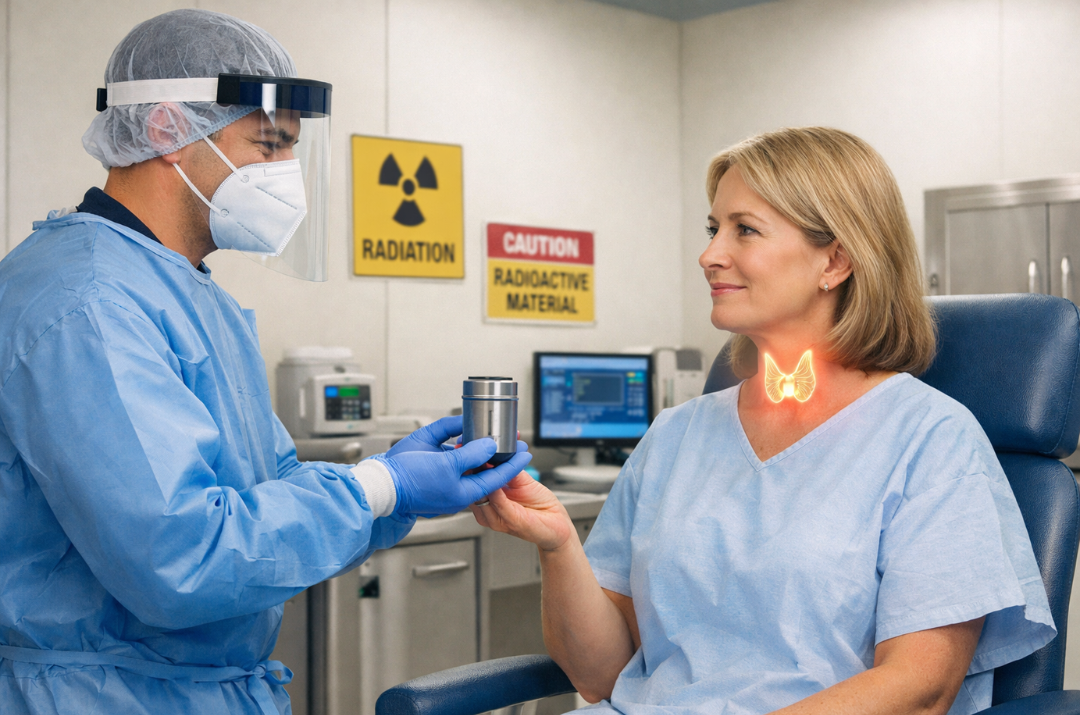
Common Uses of RAI Therapy
01. Thyroid Cancer Treatment
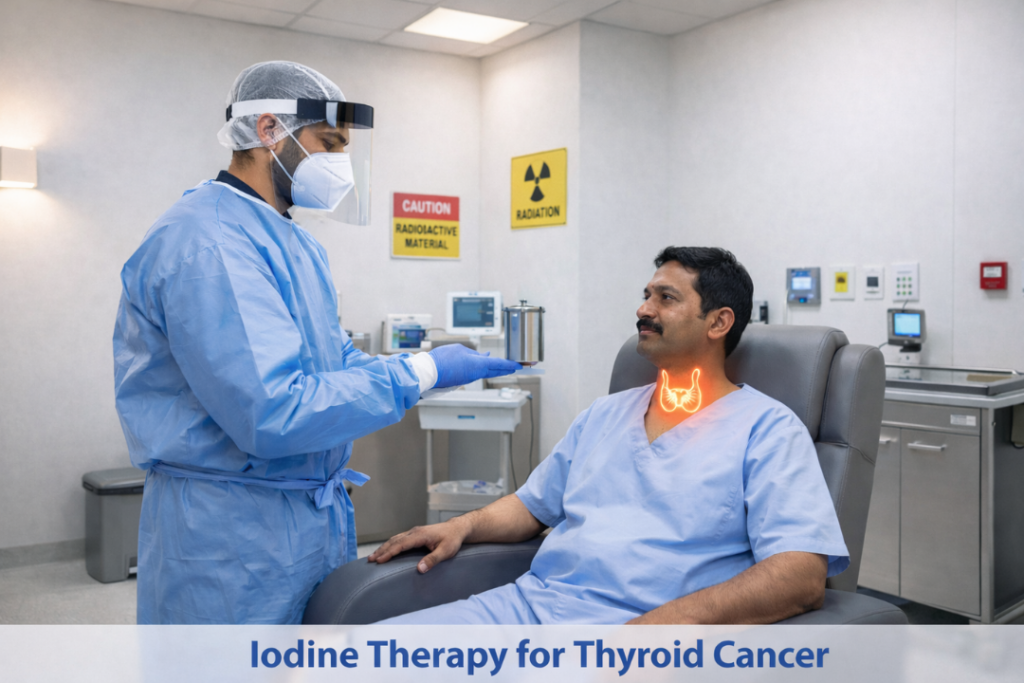
After Surgery: If you’ve had your thyroid removed due to cancer, RAI therapy helps eliminate any cancer cells that might still be in your body. This is important because even small numbers of cancer cells left behind can grow back later. RAI therapy is very effective for common types of thyroid cancer, such as papillary and follicular carcinoma.
Destroying Metastatic Cancer Cells: After removing the primary thyroid cancer by surgery, if any cancer cells are found anywhere else in the body, RAI therapy will help to destroy them.
02. Hyperthyroidism Treatment (Overactive Thyroid)
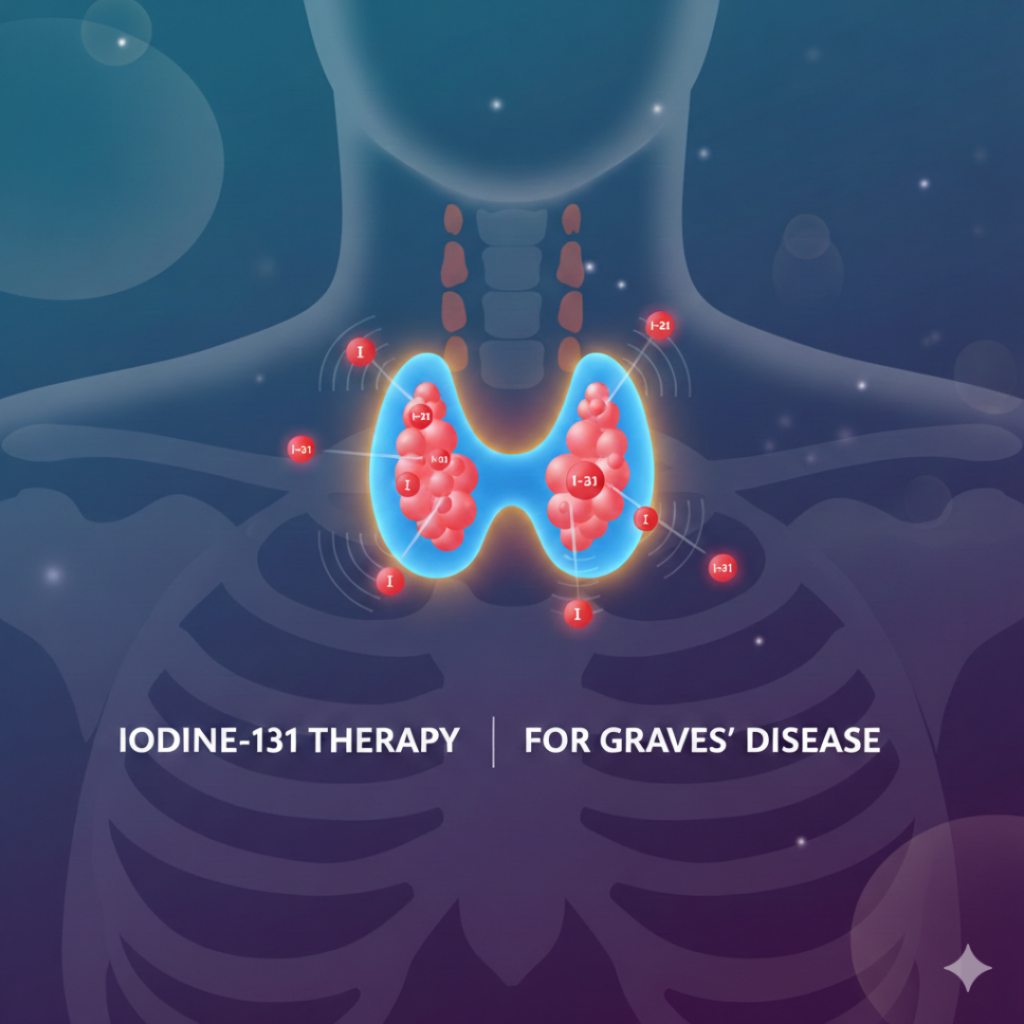
RAI can be used to treat Graves’ disease, a condition where the thyroid makes too much hormone. This makes your body work too fast. RAI targets and destroys the overactive thyroid cells, helping to bring hormone levels back to normal and improving symptoms.
03. Diagnostic Imaging
Radioiodine Scans are used to check how the thyroid is working, helping doctors find problems like hyperthyroidism or signs that cancer might have spread anywhere in the body.
How RAI Therapy Works
RAI is given as a capsule or liquid that you swallow. This makes it easy to take and doesn't require any injections or other procedures.
The iodine travels through your bloodstream and is absorbed by your thyroid, because the thyroid naturally takes up iodine and it delivers radiation to thyroid cells.
The radioactive iodine releases radiation that destroys the thyroid cells, whether they are overactive cells or cancer cells. This treatment is very precise and effective.
Since only the thyroid absorbs iodine, healthy tissues in the rest of your body are largely unaffected by the radiation. This minimizes side effects and makes the treatment safer.
Types of RAI Therapy
1. Low-Dose Iodine Therapy (Outpatient Procedure)
For Graves’ Disease and Low-Risk Thyroid Cancer: In cases where the thyroid problem is less severe or the cancer is at low risk of spreading, a low dose of radioactive iodine is used. This treatment is usually done as an outpatient procedure, meaning you can go home the same day. It doesn’t require a hospital stay.
For Graves’ disease, the goal is to treat an overactive thyroid. In low-risk thyroid cancer, it helps eliminate any small cancer cells that may have been missed after surgery.
2. High-Dose Iodine Therapy (Require Hospital Stay)
For High-Risk or Metastatic Thyroid Cancer: When thyroid cancer is more aggressive or has spread to other parts of the body, a high dose of radioactive iodine is given. This requires a short hospital stay of about one or two days because the radiation is stronger. You may need to stay in the hospital to protect others from exposure as per AERB guidelines.
This higher dose can be very effective in treating cancer that has spread or is at high risk of coming back, as it targets cancer cells more intensely.
Types of RAI Therapy
1. Low-Dose Iodine Therapy (Outpatient Procedure)
For Graves’ Disease and Low-Risk Thyroid Cancer: In cases where the thyroid problem is less severe or the cancer is at low risk of spreading, a low dose of radioactive iodine is used. This treatment is usually done as an outpatient procedure, meaning you can go home the same day. It doesn’t require a hospital stay.
For Graves’ disease, the goal is to treat an overactive thyroid. In low-risk thyroid cancer, it helps eliminate any small cancer cells that may have been missed after surgery.
2. High-Dose Iodine Therapy (Require Hospital Stay)
For High-Risk or Metastatic Thyroid Cancer: When thyroid cancer is more aggressive or has spread to other parts of the body, a high dose of radioactive iodine is given. This requires a short hospital stay of about one or two days because the radiation is stronger. You may need to stay in the hospital to protect others from exposure as per AERB guidelines.
This higher dose can be very effective in treating cancer that has spread or is at high risk of coming back, as it targets cancer cells more intensely.
Benefits of RAI Therapy
-
Effective and Targeted Treatment
RAI therapy is highly effective for treating thyroid cancer and hyperthyroidism. It specifically targets the thyroid, so there’s minimal effect on the rest of the body.
-
Minimal Side Effects
Most people have very few side effects. Any side effects that do occur are usually mild like a sore throat or dry mouth or mild gastritis.
-
One or More Treatments
Many patients only need one dose of RAI, while very few others may need a second dose to fully treat the thyroid issue.
-
Quick Recovery
Whether it’s a low or high dose, most people recover quickly from RAI therapy. If you’re an outpatient, you can return home the same day. For those receiving a high dose, you’ll be closely monitored in the hospital for a short period.
Things to Know After RAI Therapy
Radiation Precautions :
After treatment, you may need to take some precautions to avoid exposing others to radiation, especially if you’ve had a high dose.
RAI therapy is a proven and effective treatment for thyroid problems, offering a targeted approach to both cancer and overactive thyroid conditions. Whether you’re receiving a low or high dose, it’s designed to improve your health with minimal impact on your daily life.
Subsribe To Our Newsletter
Stay in touch with us to get latest news and special offers.